ADA Mobile Bathroom Regulations for Momentary Events Discussed
If you are planning a celebration, street fair, outdoor wedding event, charity run, county event, or pop-up community celebration, restroom gain access to is never ever a side problem. People remember whether an occasion felt inviting, and nothing shapes that feeling faster than whether they might really use the facilities given. For visitors with wheelchair disabilities, a basic mobile device may not work at all. That is where ADA guidelines matter, and where a lot of occasion organizers get stumbled up.
The great news is that the core structure is not mystical. The federal criterion that governs this area is the 2010 ADA Criteria for Accessible Style, as interpreted by the united state Accessibility Board and the Department of Justice. For temporary events, the basic expectation is uncomplicated: if you offer collections of mobile single-user commode systems, at least 5% of the units in each cluster need to come. That regulation applies also at temporary events.
That sounds simple on paper. In the field, though, compliance often breaks down in the details. A vendor provides an ada mobile bathroom, yet it obtains put on soft yard without any steady course. A coordinator orders one ada certified mobile toilet for a large location, but spreads out restroom financial institutions throughout the website and forgets that the 5% policy applies by cluster, not simply to the overall count. A system shows up with the ideal footprint yet no usable access because the entry location is blocked. Those are the blunders that matter.
The rule most people need to comprehend first
For mobile single-user toilets organized with each other in a collection, at least 5% of the devices because collection must come. If you have a short-lived occasion with multiple bathroom groups spread out around the premises, you do not intend to assume only in regards to a sitewide grand overall. The cluster matters.
That point gets ignored more than it should. Picture an event with one bank of restrooms near the entrance, an additional by the food location, and one more near the performance room. So one location has an ada easily accessible portable restroom, someone who requires it may be compelled to cross a big site, navigate groups, or traverse uneven surface simply to reach a commode. The rule is implied to avoid that kind of sensible exclusion.
Because the standard is percentage-based, the exact unit matter depends on the number of portable toilets remain in each collection. The law speaks in portions, not in a one-size-fits-all event number. In technique, occasion planners need to review collection layout early, not after the vehicle is already on the road.
An available device is more than a broader box
A lot of individuals utilize the phrase ada portable toilet as if it merely implies a bigger portable washroom. Size matters, yet it is only part of the photo. An available system has to additionally meet toilet-room technological requirements. Those consist of indoor clearances, transforming room, door steering clearances, and applicable policies for grab bars and water-closet clearances.
This is where professional judgment aids. It is not nearly enough for an unit to be marketed delicately as wheelchair-friendly or sizable. If the system does not really give the technological features required for access, the tag does not fix the problem. When someone asks whether they need an ada certified accessible portable washroom or a common deluxe device, the solution is that convenience upgrades and lawful access are not the same thing.
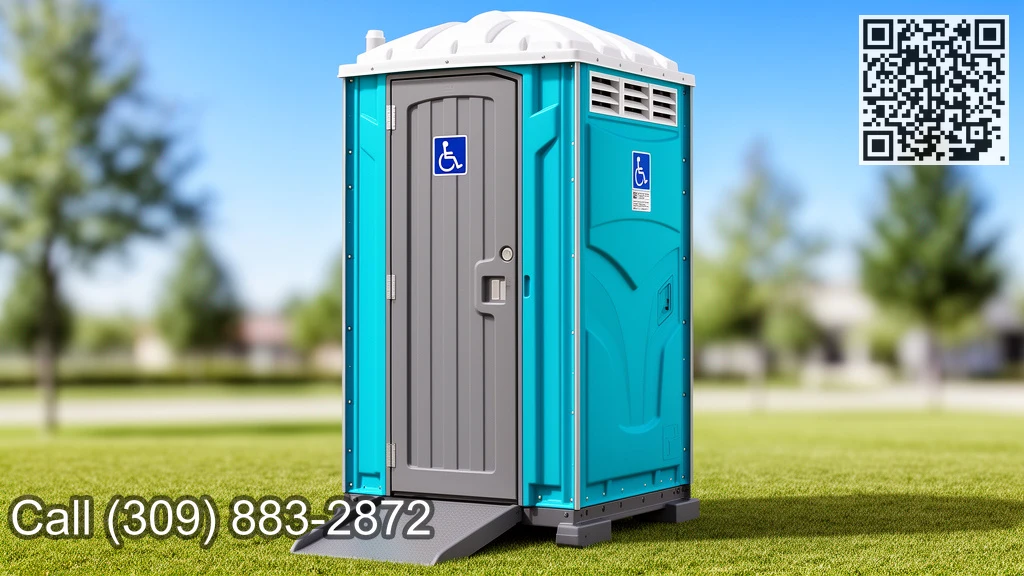
The unit should likewise be related to the International Symbol of Accessibility. That might seem like a little information, yet it matters on hectic occasion premises. Clear identification aids visitors find the best unit without having to open doors, ask staff, or navigate a line just to discover whether a washroom is usable for them.
Placement is where lots of events quietly fail
An ada compliant mobile toilet can still be properly unusable if it is put terribly. The unit needs to have an easily accessible course and entry, and any type of required ramps or touchdowns should adhere to ADA technological requirements. In simple language, reaching the washroom becomes part of availability, not an optional extra.
This is one of the hardest lessons for temporary-event groups due to the fact that outside websites are hardly ever perfect. Fields incline. Crushed rock shifts. Rainfall changes everything in an hour. A path that looks satisfactory during setup may end up being difficult after foot web traffic churns the ground. Coordinators in some cases concentrate so heavily on purchasing the right system that they neglect to ask the following concern: can a guest really reach and enter it with dignity and reasonable independence?
I have seen occasion maps where the ada handicap available mobile washroom was technically existing, however put behind barricades, parked beyond a lip in the sidewalk, or positioned where service cars partially blocked the door swing. On paper, package was examined. On website, the experience was bad. Availability is evaluated being used, not in theory.
A https://jaidentgwu070.almoheet-travel.com/ada-available-portable-restroom-rental-what-ease-of-access-criteria-apply useful method to consider it is this: the course ought to make good sense to a genuine individual arriving in a wheelchair, using a pedestrian, or needing added maneuvering space. If the course needs going across mud, aesthetics without a compliant therapy, or a high improvised ramp, you ought to think you have a problem.
Temporary does not imply exempt
This is among one of the most usual misunderstandings. Some coordinators hear the expression short-term event and assume access rules are looser. They are not, at the very least not in the way many people hope. The Accessibility Board has made clear that the available mobile toilet scoping uses even at short-term events.
That issues for short-duration events equally as much as for multi-day celebrations. A one-day fundraising event still has to be prepared sensibly. A neighborhood party still requires obtainable cleanliness. The law does not treat a short occasion as a freebie to ignore access.
There is, however, a vital distinction in the broader background of portable toilet regulations. The older 1991 requirements included an exemption pertaining to construction-site mobile bathrooms made use of specifically by building employees. That slim context creates complication since people hear about it secondhand and think mobile systems in general are exempt. They are not. For general ada mobile commode rental usage at occasions, the accessible-unit requirement continues to be relevant.
What event coordinators need to ask their rental company
Portable restroom vendors differ. Some know the access needs cold. Others use loose sales language that can leave coordinators with the wrong tools. If you are ordering devices for a public event, clarity issues greater than jargon.
Ask direct questions and obtain straight responses:
- How many systems remain in each cluster, and how many easily accessible units are being supplied for every cluster?
- Does each accessible device meet ADA toilet-room technical needs, consisting of clearance and maneuvering space?
- Will the device arrive noted with the International Symbol of Accessibility?
- What does the supplier demand from the website to provide an easily accessible route and entrance?
- If a ramp or landing is required, who is in charge of making sure it complies?
Those questions do two things. Initially, they compel the preparation conversation into specifics. Second, they expose really promptly whether the distributor deals with ease of access as an actual conformity issue or as an afterthought. If the responses are obscure, maintain asking.
Why the site plan matters as much as the order form
An easily accessible bathroom is never simply a rental item. It is a site-planning concern. The positioning of parking, drop-off factors, pathways, secure fencing, ticketing, food service, stages, and bathroom banks all influence whether the bathroom accessibility really works.
At temporary events, it prevails to build the design around group circulation and after that squeeze in hygiene at the end. That series typically produces accessibility difficulty. The far better approach is to decide early where each cluster belongs, how visitors will certainly reach it, and whether each area can support an ada compliant portable bathroom with a really available approach.
This matters especially on huge grounds. If you have toilets in numerous areas, visitors need to not have to take a trip from one end of the occasion to another to locate the only ada certified portable bathrooms. The cluster guideline currently pushes in that instructions, but thoughtful layout goes even more. It thinks about how individuals move via the event at different times of day and whether obtainable restroom access remains realistic when groups build.
One detail that obtains ignored is queueing area. Even if the unit itself is certified, a severely managed line can choke off gain access to. Short-lived fence, stanchions, and crowd-control obstacles must not narrow or block approach to the available unit.
Common blunders that are easy to prevent
Most washroom availability failures at events are not exotic legal puzzles. They are regular planning blunders that compound.
The first is under-ordering easily accessible devices due to the fact that the coordinator computes 5% across the entire event instead of within each cluster. The 2nd is getting the right system type however setting it on a course that is not obtainable. The 3rd is thinking that any extra-large mobile toilet is instantly ADA certified. The fourth is failing to remember identification signage. The fifth is treating setup as final, also when weather condition or site adjustments make the route worse by event time.
None of those errors call for negative intent. They usually originate from rush, fragmented responsibility, or weak interaction in between the location, coordinator, and rental company. That is why a website stroll, also a quick one, frequently saves difficulty. It forces everyone to consider the exact same ground conditions and discover the same pinch points.
The technological side, without making believe every occasion is the same
People often want a straightforward universal checklist, however portable washroom conformity has technical facets that withstand faster ways. The suitable standards cover things like component clearances, turning room, steering clearances at doors, and grab-bar and water-closet clearance guidelines. Those are not information to rate from memory.
For that reason, a careful organizer stays clear of making presumptions based upon appearance alone. One version might look similar to an additional and still differ in such a way that affects functionality. One site might seem level up until you represent the slope at the entrance. One entry might appear vast enough till a barrier or trash bin modifications the maneuvering space.
This is additionally where empathy issues. For lots of visitors, a restroom issue is not a small aggravation. It can require them to leave early, prevent food and drink, skip the event completely, or count on assistance they would rather not need. Individuals discover whether accessibility was treated as real friendliness or as minimal compliance.
When multiple washroom financial institutions are spread out across a venue
Large short-lived occasions commonly divide cleanliness into several financial institutions for functional reasons. That can be wise group management, yet it raises the risks for planning easily accessible devices correctly. Since the 5% guideline relates to each collection, a dispersed design needs distributed accessibility.
Think with use patterns instead of simply headcount. The household location might need an easily accessible choice close by. The concert area may require one that remains reachable even when the main target market location gets loaded. The supplier village may require its own accessible stipulation if guests invest long periods there.
This is not an issue of gold-plating the website. It is the useful effect of how individuals experience range, surface, and congestion. A visitor with restricted flexibility may not have the ability to move throughout a vast location just because the only ada-compliant portable bathrooms were focused at the entrance.
What "easily accessible route" actually suggests in occasion planning terms
The formal standard utilizes the phrase obtainable course, which expression lugs even more weight than lots of teams realize. It is not simply "there is some method to arrive." It means the path itself need to be accessible, and if a ramp or touchdown is needed, it needs to satisfy ADA technological requirements too.
On irreversible websites, course planning can be more straightforward since the facilities is already developed. Short-lived events are harder. Coordinators might require to adjust car park, fairgrounds, roads, yards, or open areas. That creates judgment phone calls, especially where weather, short-term flooring, and quality adjustments enter into play.
A valuable planning habit is to examine the route as a guest would certainly experience it from arrival to restroom door. Begin at the most likely drop-off or entrance point. Adhere to the path. Look for sudden degree changes, pinch points, unpredictable surfaces, and anything that would hinder door handling. If the answer to any of those issues is "personnel can assist," that is usually a sign the configuration deserves review. Support may be appreciated, however it is not an alternative to an easily accessible route.
Language issues when you book units
In the rental market, you will certainly hear a number of phrases: ada portable toilet, ada easily accessible portable toilet, ada compliant portable restrooms, ada certified mobile bathroom, even ada-compliant mobile bathroom with a hyphenated kind in item summaries. The wording varies, yet the issue is not branding. The problem is whether the system and its placement please the appropriate ADA requirements.
That is why I always urge coordinators to move past labels swiftly and talk about features and conditions. The number of units per cluster? Which model is being supplied? What clearances does it offer? Is it significant with the accessibility icon? What is the course? That confirms the entrance condition on site? Those questions matter greater than whichever phrase shows up on the invoice.
The very same goes with searches like ada portable bathroom rental. Browse terms serve for discovering suppliers, however they do not guarantee the delivered setup will be certified. Actual compliance happens when the appropriate unit arrives, in the best number, at the right location, with the ideal access.
A note on enforcement and why this keeps getting more attention
Accessibility conformity belongs to a more comprehensive atmosphere of enforcement and public attention, not a fading problem. Federal ADA conformity task proceeds throughout sectors. One current sign of that larger landscape is the Department of Justice advice affecting internet and mobile ease of access target dates for state and local governments. That guidance is not regarding mobile toilets specifically, yet it reflects a wider reality: accessibility obligations are energetic, visible, and progressively difficult for companies to ignore.
For momentary occasions, that implies restroom gain access to need to be dealt with as part of the very same overall compliance way of thinking as ticketing, interactions, paths, and location accessibility. The days when organizers could deal with availability as a niche problem are long gone.
If you are trying to remain useful, concentrate on these priorities
When occasion groups feel overwhelmed, I generally recommend tightening interest to the points with the largest real-world impact.
- Count restroom units by collection, not just by occasion total.
- Make sure a minimum of 5% of each collection is accessible.
- Confirm the obtainable device actually satisfies ADA technological washroom requirements.
- Provide an accessible path and entryway, consisting of compliant ramps or landings if needed.
- Check that the unit is understood the International Symbol of Accessibility.
Those five priorities will not answer every site-specific inquiry, however they cover the concerns that frequently make or damage usability.
The human side of obtaining it right
There is a difference between avoiding problems and creating an occasion where individuals really feel considered. Obtainable toilets sit right at that divide. If you have actually ever participated in an event with a parent using a mobility device, an older relative with a pedestrian, or a pal recouping from surgical treatment, you understand how swiftly a bathroom concern ends up being everyone's concern. Strategies change. Time gets lost. Stress and anxiety rises. What ought to have been an easy minute develops into logistics and embarrassment.
By contrast, when ada certified easily accessible portable bathrooms are correctly positioned, clearly significant, and convenient, most guests never ever need to think of them. That is the objective. Access functions best when it feels ordinary.
Temporary events have enough relocating components already. Weather condition shifts, vendors run late, web traffic reroutes, and grounds problems change. But toilet availability is one of the areas where early focus pays off. Order the right devices. Matter by collection. Shield the route. Inspect the entry. Make sure the sign is visible. Those are not attractive jobs, however they are the job that transforms accessibility from an assurance into something real.
And for the guest determining whether your occasion really feels open up to them, that distinction is everything.
 Ask ChatGPT
 Ask Grok
 Ask Perplexity
 Ask Claude
 Ask Google AI
 Ask You
Ends · HECTORWZOU109